Integrating your ERP system with your HR system: the benefits
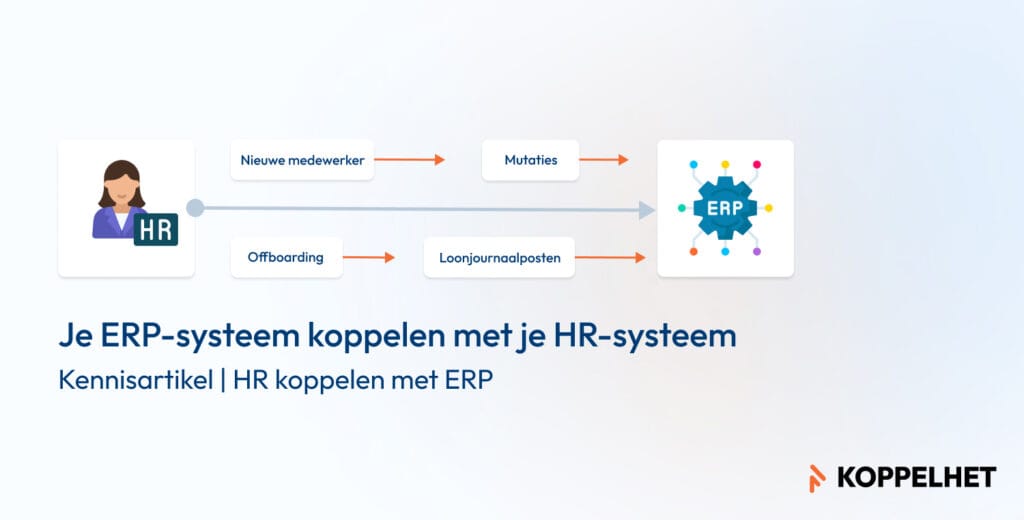
In many organizations, the HR system is the source of truth for all employee data. But in addition to an HR system, companies often work with a separate ERP system for project management, timekeeping and financial administration. Without smart Integration, this leads to duplication, errors and inefficiency. Integrating your HR system with your ERP system ensures automated and error-free data transfer, making processes run more smoothly.
The challenges without this Integration
When there is no Integration between the HR and ERP systems, several pain points arise:
- Employees must be manually created in both systems, leading to double entry and potential for errors.
- Mutations such as job changes or department changes must be tracked manually in multiple systems.
- The offboarding of employees must be recorded twice, which is error-prone and inefficient.
- Payroll journal entries must be manually exported and imported, which requires a lot of manual transformation and can cause errors.
- Project and time tracking in the ERP system get confused if leave and absence are not synchronized correctly, which can even affect billing to customers.
So it takes a lot of extra time and management and creates unnecessary errors. Integration between HR and ERP systems solves all these challenges, KoppelHet.
The basics: efficient data flow between HR and ERP
Integration between your HR and ERP systems ensures that essential employee data such as positions, departments, salaries and leave records are automatically synchronized. This saves time, prevents errors and ensures that everyone is always working with the most up-to-date data.
Examples of commonly used HR systems include AFAS, Workday, Visma Raet, HR2Day and SAP SuccessFactors. Commonly used ERP systems include SAP, Microsoft Dynamics 365, Oracle ERP and Exact Online.
Let’s look at some of the key processes optimized by this Integration.
1. The onboarding of new employees
When a new employee starts, data such as name, position, department and start date are recorded in the HR system. Because this data is also needed in the ERP system for, for example, time registration or project management, Integration ensures that the employee is automatically created in the ERP system.
Advantages:
- No duplicate data entry.
- Employees can get right to work with project and time tracking.
- Error-free data transfer.
2. Automatic synchronization of employee changes
During employment, employees change positions, departments or responsibilities. These changes are made in the HR system, but without an Integration, they must be manually updated in the ERP system. Integration automates this process and prevents unnecessary errors and frustration in the HR department.
Advantages:
- Changes are made immediately in all relevant systems.
- No inconsistencies between HR and ERP data.
- Reduced administrative burden for HR and IT.
3. Offboarding of employees
When an employee leaves employment, this is recorded in the HR system. Integration with the ERP system ensures that this employee is automatically deactivated in the ERP system on the correct date. This prevents former employees from still having access to company systems or being included in reports.
Advantages:
- Automatic closure of accounts in the ERP system.
- Security and compliance are ensured.
- No risk of unauthorized access after retirement
4. Leave and absence synchronization
Leave and absence are often recorded in the HR system through a self-service portal. The ERP system manages project planning and timekeeping. Integration ensures that leave and absence data is automatically transferred to the ERP system, giving managers and planners real-time visibility into employee availability.
Advantages:
- Accurate project scheduling without manual input.
- Reduced risk of errors in leave and sick records.
- Efficient collaboration between HR and project teams.
- No errors in billing to customers because leave days are not inadvertently passed on.
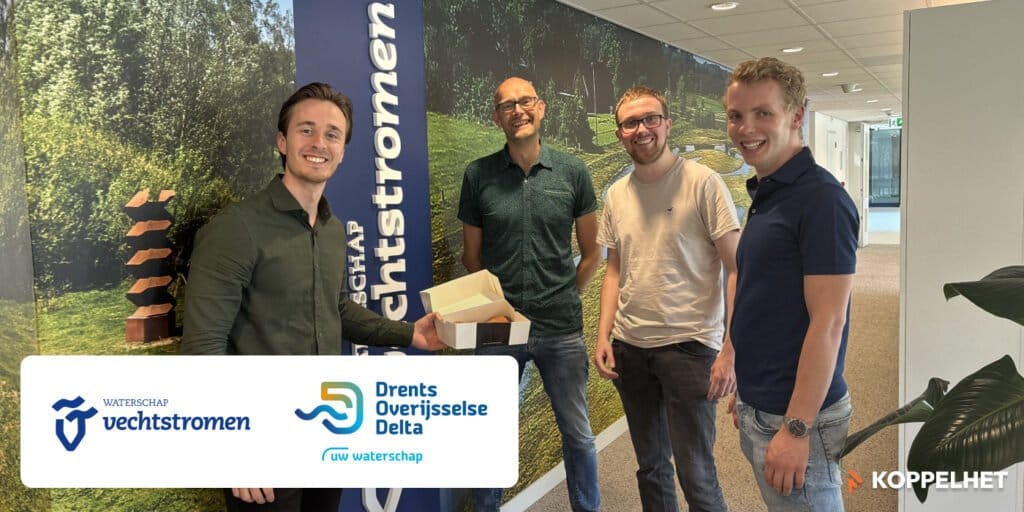
See below how we helped Waterschap Drents Overijsselse Delta and Waterschap Vechtstromen integrate their HR and ERP system 👇
5. Payroll journal entries directly to the ERP system.
After the monthly payroll in the HR system, payroll journal entries are generated. Integration with the ERP system ensures that these are automatically synchronized and processed correctly in the correct general ledger accounts.
Advantages:
- No manual entry of payroll journal entries.
- Always correct entries in financial records.
- Efficient and error-free processing of payroll expenses.
- Costs are integrated directly with the appropriate general ledger accounts, which makes for better financial reporting.
KoppelHet: the solution for smart ERP-HR integrations
KoppelHet is the platform for connecting HR&ERP systems. The KoppelHet platform offers standard connectors to effortlessly integrate HR and ERP systems. Whether you link AFAS with Microsoft Dynamics, Workday with SAP, or HR2Day with Exact Online, KoppelHet makes it easy to synchronize data between systems without manual intervention.
Check out some of our integrations with common HR and ERP systems below. Is your system not among them? No problem! We facilitate integrations with almost every HR and ERP system, check out our website for the possibilities or contact us.




Why choose KoppelHet for your HR/ERP integrations?
✅ Standard connectors for almost all HR and ERP systems.
✅ Real-time monitoring of all data flows between your systems.
✅ Automatic data synchronization for fewer errors and greater efficiency.
✅ Flexible configuration to suit your business processes.
Want to Integrate your HR system with your ERP system and optimize your processes? Contact us for a demo and experience how KoppelHet makes your organization more efficient!

Mike Fraanje
Integratie specialist
